
403 SaaS mobile website design examples
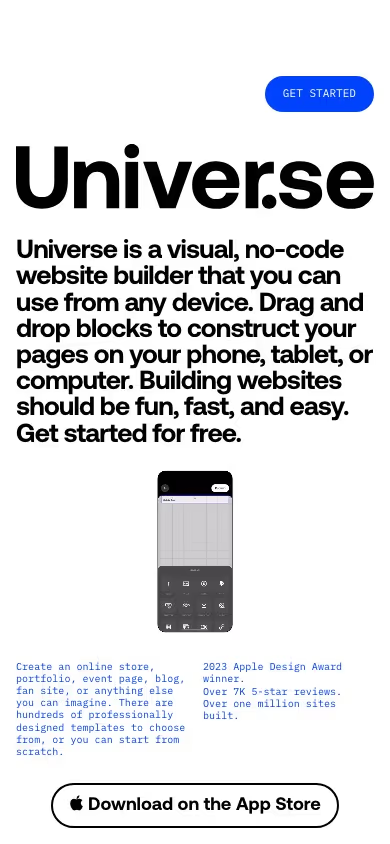
Most first visits happen on a phone. These full-length mobile captures show how the best SaaS sites adapt — reflowing heroes, stacking features, and keeping the primary action within thumb's reach.
Sponsored by (opens in new tab)
(opens in new tab)



































About mobile
A mobile landing page isn't a smaller version of the desktop one — it's a different reading order. Content that sat side-by-side on desktop (a headline next to a product screenshot, or a three-column feature grid) has to pick a sequence on a narrow screen, and the strongest mobile designs put the single most important element — usually the headline and primary CTA — first, before any supporting visual, rather than preserving the desktop hierarchy by shrinking everything proportionally. Thumb reach is a real physical constraint, not just a guideline: primary actions placed in the easily-reachable lower two-thirds of the screen get tapped more than identical buttons placed near the top, especially on larger phones. Performance compounds all of this — a mobile visitor is more likely to be on a slower connection, and a hero video or a heavy carousel that's a minor cost on desktop can be the difference between a page that loads in a second and one a visitor abandons before it renders at all.
What makes a great one
- A hero that still leads with value on a narrow screen
- Tap-friendly, reachable primary actions
- Content that stacks cleanly without losing hierarchy
- Performance-conscious, lightweight visuals
From the blog
What SaaS Websites Actually Do on Mobile (12 Real Comparisons)
Every 'best SaaS websites' list reviews desktop only. We put 12 real mobile captures at 390px next to their desktop twins — and found swapped hero visuals, disappearing CTAs, product UI shrunk to illegibility, and one site whose headline isn't even the same.
The 30 Best SaaS Websites in 2026 (Reviewed From Real Screenshots)
Thirty SaaS websites reviewed at equal depth from screenshots we captured ourselves — what's above the fold, the one section each does unusually well, and the stack, palette and typefaces behind it. With a stated selection method, not a handpicked vibe check.
25 SaaS Contact Us Page Examples, Counted Field by Field
Dropbox's contact form asks for eleven things. Warp's asks for one. We counted the fields, the routes and the published email addresses on 25 real SaaS contact pages — and not one of them promises a response time.
Frequently asked
Do SaaS landing pages need a separate mobile design?
Not a separate site, but genuinely separate design decisions — a responsive layout that just shrinks the desktop version usually reorders content badly. The best approach designs mobile as its own reading sequence, then makes sure it holds up when stretched to desktop, or designs both deliberately.
Where should the primary CTA sit on mobile?
Within easy thumb reach — generally the lower two-thirds of the screen rather than crammed at the very top next to the logo, and repeated after key sections (features, pricing) rather than requiring a scroll back to the hero.
Does mobile page speed affect SEO?
Yes, directly — Google's ranking systems use mobile page experience and Core Web Vitals as real signals, and a slow mobile experience also increases bounce rate, which compounds the problem independent of the ranking algorithm itself.