
38 SaaS website testimonial & social proof section examples
Social proof turns interest into trust. These examples show how SaaS companies present testimonials, customer quotes and wall-of-love sections that feel credible rather than canned.
Sponsored by (opens in new tab)
(opens in new tab)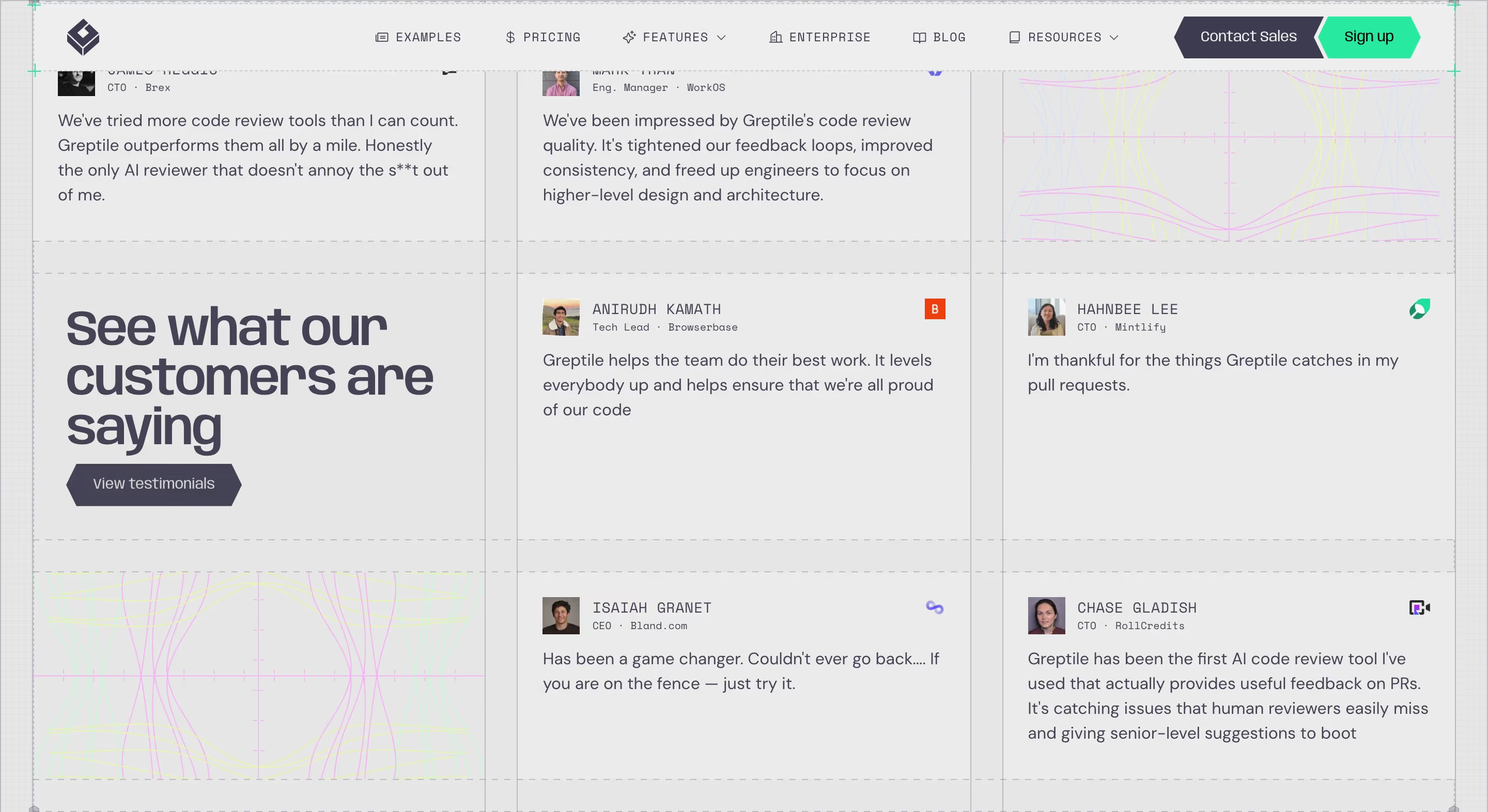
About testimonials
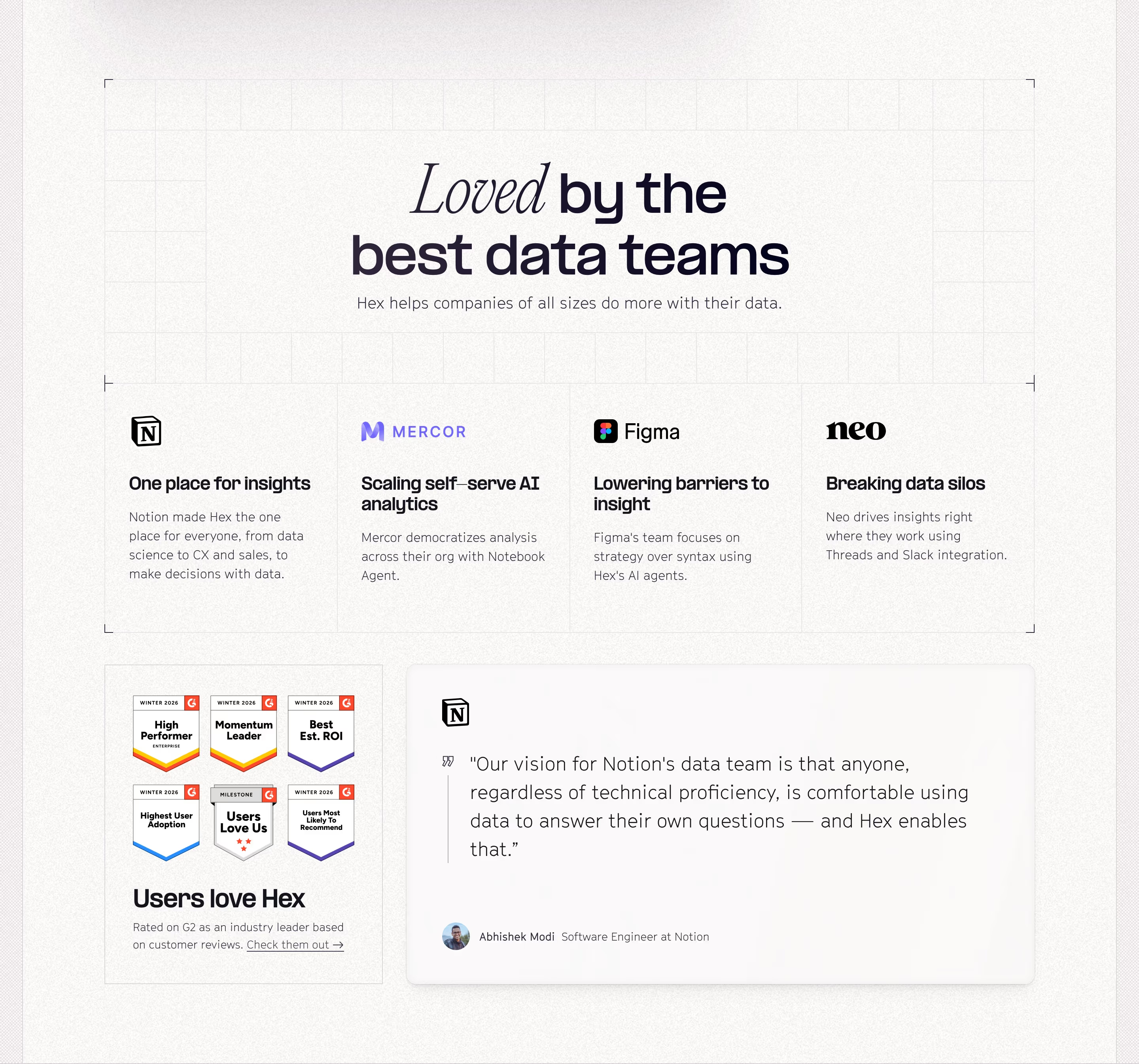
The quotes that actually move visitors are specific, not flattering — 'This cut our onboarding time from three weeks to four days' does more work than 'Great product, highly recommend,' because it's a claim a skeptical reader can picture disproving, which paradoxically makes it more believable. The strongest testimonial sections pair each quote with a real name, role, and company, and where possible a photo — anonymized or initials-only quotes read as filler even when genuine. Layout is a scanning problem: a long single-column list of quotes gets skimmed past after the second one, while a grid or auto-scrolling 'wall of love' format lets a visitor register that there are many proofs without having to read each one, which is often more persuasive than any single quote.
What makes a great one
- Real names, roles, companies and photos
- Specific, outcome-focused quotes
- Recognisable logos alongside the words
- A layout that lets visitors scan many proofs quickly
From the blog
SaaS Testimonial Sections: What Makes a Quote Actually Convert
Cursor's testimonial wall quotes Jensen Huang and Greg Brockman by name. Sanity's cites Lady Gaga's team. A real look at 12 SaaS testimonial sections and what actually makes a quote feel real instead of boilerplate.
22 SaaS Affiliate Program Pages, and the Terms They Actually Publish
Semrush publishes a 120-day cookie window and a four-tier commission table. Typeform caps you at $500 per referral. Seven of these 22 pages publish no rate at all. A page-by-page read of what SaaS affiliate pages actually disclose.
SaaS FAQ Sections That Actually Reduce Support Tickets
Sanity replaced its FAQ with a live AI chat agent. Firecrawl splits 25+ questions into four labeled categories. A real look at 12 SaaS FAQ sections — and why almost none of the questions are actually about troubleshooting.
Frequently asked
How many testimonials should a SaaS site show?
Enough to establish a pattern, not exhaustively — three to six well-chosen quotes on the main page, with a dedicated customers/case-studies page for the rest if there are more worth showing.
Do testimonials need photos to be credible?
Photos help, but a real name, role, and company do most of the credibility work. What actively hurts is a quote with no attribution at all, or attribution that reads as invented ('Happy Customer').
Should testimonials include metrics/outcomes?
Where a customer will let you use a real number, yes — a specific outcome (time saved, revenue impact, reduced errors) is more persuasive than a general sentiment, because it's concrete enough to evaluate.