
199 SaaS websites built with Next.js
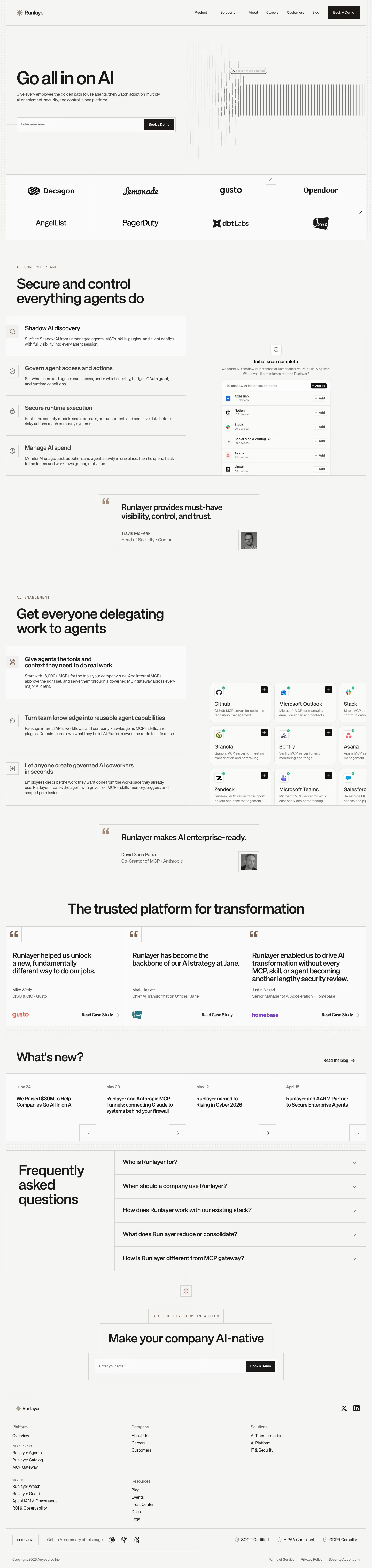
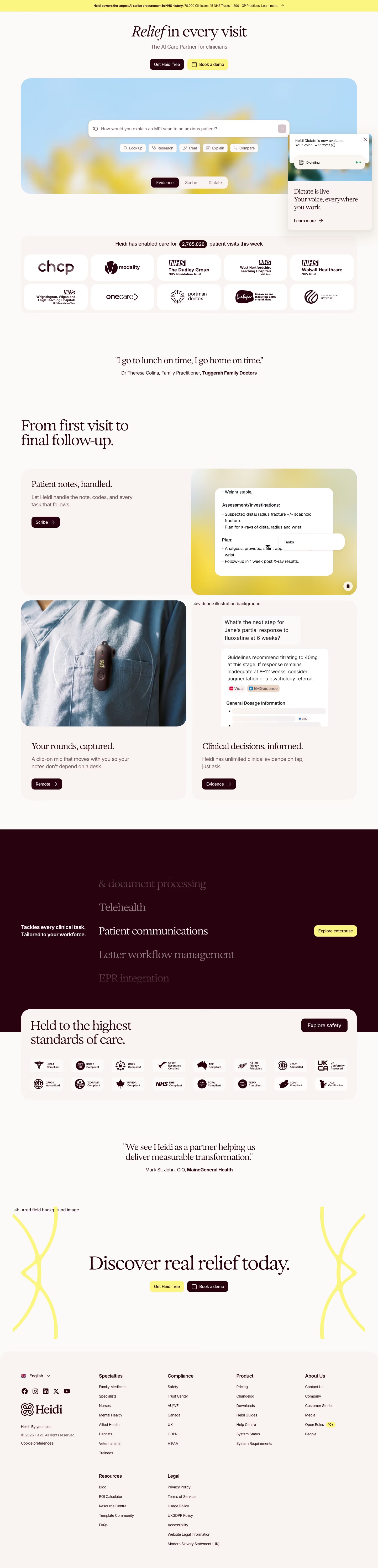
Next.js powers a huge share of modern SaaS marketing sites. These examples show how teams use it to ship fast, polished landing pages — from content-heavy marketing to app-like interactivity.
Sponsored by (opens in new tab)
(opens in new tab)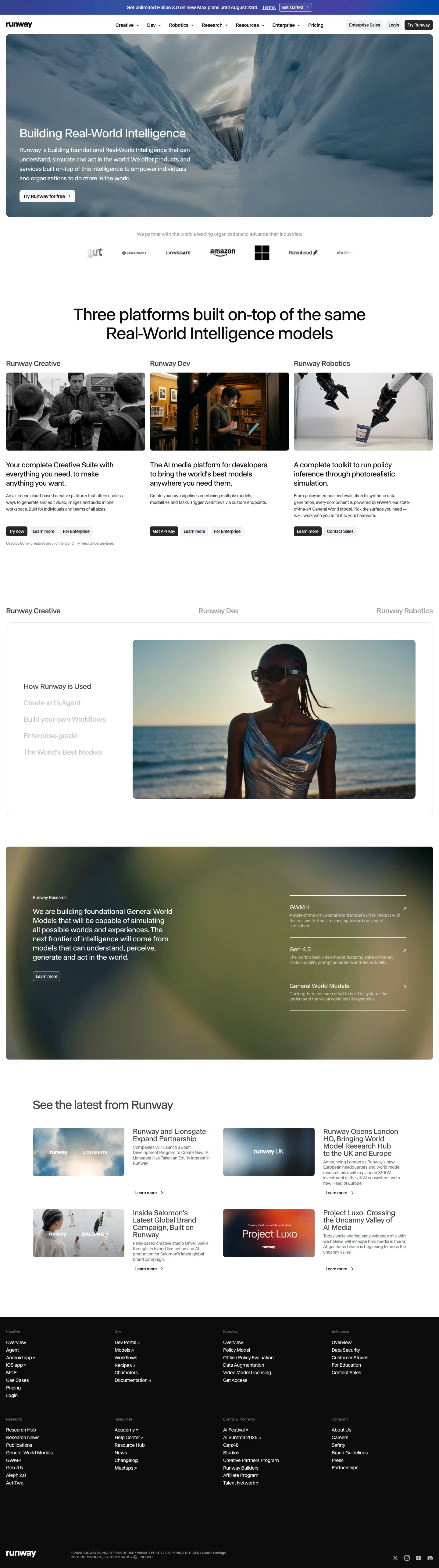

















About Next.js
Next.js's appeal for a marketing site specifically (as opposed to the product app behind it) comes down to rendering flexibility — a team can statically generate the mostly-unchanging homepage and pricing page for near-instant load times, while server-rendering or incrementally revalidating pages that change more often (a blog, a directory like this one, or personalized content), all inside one framework rather than stitching together a separate static site generator and app. It's also the default choice for teams already building their product in React, since the marketing site and the app can share components, design tokens and even authentication state without a second toolchain. The tradeoff worth knowing: that same flexibility means a Next.js marketing site's performance is only as good as the rendering strategy chosen for each page — a site that server-renders everything on every request when it could have cached most of it will be slower than a simpler static site, so seeing 'built with Next.js' isn't itself a performance guarantee.
What makes a great one
- Fast, near-instant page loads even on content-heavy pages
- A visual system shared cleanly between marketing site and product app
- Server-rendered or statically generated metadata for real SEO titles/descriptions
- Smooth client-side navigation without a full page reload
From the blog
We Analysed 355 SaaS Websites: Stacks, Colours, Fonts and Sections
Original data from 355 real SaaS websites we captured and tagged ourselves — which tech stacks they run, what colour they actually lead with, how dominant Inter really is, and which page sections most companies never build. With the limitations stated.
The Most Common SaaS Website Tech Stacks in 2026
What 331 real SaaS marketing sites in our catalog are actually built with — Next.js and Tailwind CSS's real share, and where Webflow, Framer, Astro and the rest land, with real examples from each.
The 30 Best SaaS Websites in 2026 (Reviewed From Real Screenshots)
Thirty SaaS websites reviewed at equal depth from screenshots we captured ourselves — what's above the fold, the one section each does unusually well, and the stack, palette and typefaces behind it. With a stated selection method, not a handpicked vibe check.
Frequently asked
Why do SaaS companies pick Next.js for their marketing site specifically?
Mainly to share code and design system with a React-based product app, and to mix static generation (fast marketing pages) with server rendering or ISR (dynamic content like a blog or directory) inside one framework.
Is a Next.js site automatically fast?
No — Next.js makes fast rendering strategies available, but a page that's server-rendered on every request instead of statically generated or cached can still be slow. The framework choice matters less than how each page actually uses it.
Does using Next.js help SEO?
Indirectly, by making it easy to do the things that do help SEO — fast static pages, server-rendered metadata, image optimization — but none of that is automatic just from choosing the framework; it still has to be configured deliberately.